OBD2 Scanner for MOT Checks: What to Verify Before Test Day
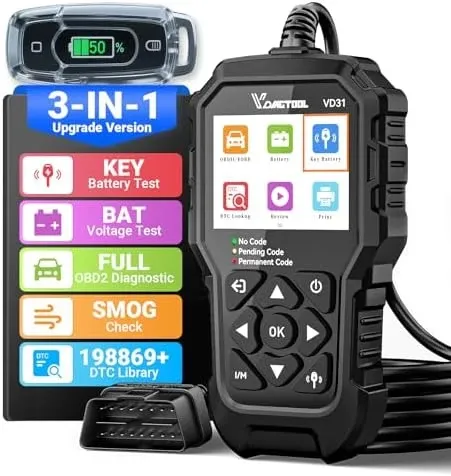
Short answer: an OBD2 scanner for MOT preparation can show engine and emissions codes, freeze-frame data and readiness status before your appointment. It cannot predict an MOT pass, and clearing a code does not repair the fault; record the evidence, fix the cause and then verify the result.
For a driver worried about wasting a booked test, the most useful scan is an early, evidence-led check—not a last-minute attempt to switch off the lamp.
What the current UK MOT rule actually checks
The current GOV.UK MOT inspection manual tells testers to check that the engine malfunction indicator lamp (MIL, often called the EML) illuminates and then goes off. For vehicles in scope, a MIL that is inoperative or indicating a malfunction is a major defect.
The manual's application dates are not the same as common scanner-compatibility dates: its MIL check includes petrol passenger vehicles first used on or after 1 July 2003 and diesel vehicles first used on or after 1 July 2008, subject to the manual's vehicle categories and exceptions. Do not turn “OBD works on many 2001/2004 cars” into an MOT rule.
Readiness monitors can help diagnose whether emissions self-checks have completed, but the ordinary MOT is not a pass/fail reading of the status screen on your handheld tool. The prescribed inspection and emissions test remain authoritative.
A sensible pre-MOT scan sequence
- Check the MIL behaviour. With the vehicle handbook, observe whether it illuminates at ignition-on and goes out as designed after start.
- Scan before clearing. Save stored and pending codes, status and freeze-frame data.
- Investigate the cause. A DTC identifies a condition or system to test; it does not name a guaranteed failed part.
- Repair properly. Use competent help where the procedure, warning or symptoms exceed your ability.
- Verify after repair. Re-scan, check that the lamp behaves normally and follow any manufacturer-specific confirmation or drive-cycle instructions.
- Check the rest of the car. Lights, tyres, brakes, visibility, structure and other MOT items sit outside a basic engine scan.
GOV.UK's overview of parts checked at an MOT is the right reminder that an OBD screen covers only a narrow slice of the test.
Why clearing codes before the test can backfire
Clearing can remove stored evidence and reset emissions monitors without fixing the underlying condition. The lamp may return, a technician may lose useful freeze-frame context and the car can still fail on the actual defect or another inspection item.
If a warning returns after repair, capture the new evidence rather than repeatedly erasing it. The RAC DTC guide explains why the code is a starting point for testing, not an instruction to replace the named item.
When not to wait for the MOT appointment
A red or flashing engine warning, loss of power, overheating, smoke, a strong fuel smell or severe vibration needs prompt safety judgement. The AA's EML guidance advises stopping as soon as it is safe and seeking help for a red or flashing light. A scanner result does not override those symptoms.
A scan also cannot certify that brakes, steering, tyres, restraint systems or the vehicle structure are safe. Book an appropriate inspection if you are unsure.
Using the ScanCar VD31 for preparation
The ScanCar VD31 product page lists stored-code reading and clearing, live data, freeze-frame and I/M readiness on a wired, no-app device. At £75.36, it can support the record–repair–verify sequence for a compatible vehicle, but it is not an MOT pass predictor or a full-system workshop scanner.
If this is your first connection, follow the car code reader for beginners instructions. For broader purchase checks, see the car diagnostic scanner UK guide. Confirm the ScanCar VD31 details and vehicle coverage.
FAQ
Will an MOT tester fail my car because a scanner shows a stored code?
The current MOT rules do not use a consumer scanner's stored-code list as a general pass certificate. The tester follows the official inspection, including the MIL and emissions checks that apply to the vehicle.
Does no engine code mean the car will pass its MOT?
No. An MOT covers many safety and environmental items that a basic OBD2 reader cannot assess, and some defects do not create an engine code.
How long should I drive after clearing codes before an MOT?
There is no honest universal distance. Do not clear codes merely to prepare for the test; repair the cause and follow the vehicle maker's verification or drive-cycle procedure.
Can an OBD2 reader test brakes, tyres or diesel smoke?
No. A basic engine reader does not inspect the physical and safety items in an MOT or replace the prescribed emissions test.
Ready to take control of your car's health with ScanCar?
Shop Now — £75.36