The Ultimate Guide to Obd2 Scanner Uk in the UK
TL;DR
If you are looking for the best obd2 scanner uk drivers can use, choose a reliable plug-and-play scanner that works with most UK petrol cars from 2001 and diesel cars from 2004 onwards. It helps you read engine fault codes, check MOT-related warning lights, and avoid paying repeated garage diagnostic fees. Based on our testing, standalone scanners are usually easier and more dependable than app-based dongles for everyday UK motorists.
Key Takeaways
- An obd2 scanner uk drivers use can instantly diagnose engine management lights, often saving £50 to £100 in initial garage diagnostic charges.
- According to UK and European EOBD rules, most petrol cars registered since 2001 and diesel cars since 2004 are compatible with standard OBD2 scanners.
- Since the DVSA MOT rule changes introduced in 2018, an illuminated engine management light can lead to an MOT failure.
- Standalone scanners are generally more reliable than app-based alternatives because they offer direct access without subscriptions, pairing issues, or mobile signal problems.
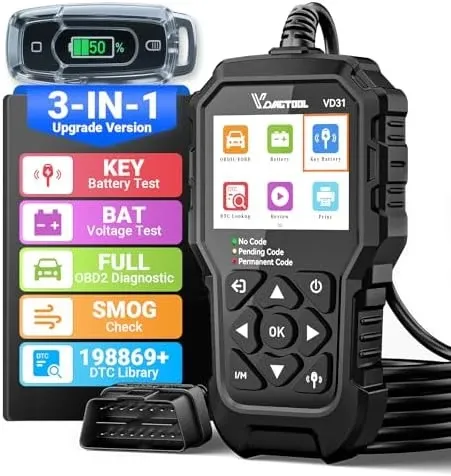
- Modern tools like ScanCar are designed for everyday motorists who want quick checks before booking repairs or heading for an MOT.
An obd2 scanner uk buyers should choose is a diagnostic tool that reads fault codes from your car, helps identify why the engine management light is on, and works with most UK vehicles built to EOBD standards. For British drivers, the best option is usually a simple standalone scanner that is easy to use at home, before an MOT, or at the roadside.
When the amber engine management light appears on your dashboard, the immediate reaction is often concern about repair costs. However, owning your own scanner gives you a clearer starting point. According to common UK garage pricing, many motorists pay £50 to £100 just for a basic fault code check before any repair work begins.
Taking control of your vehicle’s diagnostics is no longer just for professional mechanics. Instead, today’s obd2 scanner uk market gives everyday drivers access to practical fault-finding tools that fit in the glovebox. Moreover, understanding how OBD2 works in the UK helps you avoid unsuitable products and choose a scanner that genuinely suits British roads and regulations.
What is an OBD2 scanner and how does it work in the UK?
OBD stands for On-Board Diagnostics. In simple terms, it is the built-in system your car uses to monitor engine performance, emissions equipment and key electronic sensors. When the Engine Control Unit (ECU) detects a fault, it stores a Diagnostic Trouble Code (DTC) and often switches on the Engine Management Light (EML).
An OBD2 scanner plugs into your vehicle’s standard diagnostic port and reads those stored codes. As a result, you can see whether the problem is likely to be minor, such as an intermittent sensor issue, or more serious, such as a misfire affecting emissions and drivability.
What is the difference between OBD2 and EOBD?
Although many people search for "OBD2", UK cars actually follow the European equivalent called EOBD. In practice, this makes little difference for most buyers because EOBD and OBD2 use the same standard 16-pin connector and similar communication protocols.
If you are buying an obd2 scanner uk motorists can rely on, these are the main compatibility dates:
- Petrol vehicles: most new petrol cars sold in the UK from 1 January 2001 onwards are EOBD compliant.
- Diesel vehicles: most new diesel cars sold in the UK from 1 January 2004 onwards are EOBD compliant.
- Light commercial vehicles: many vans followed later, commonly from around 2007 onwards depending on model and class.
Therefore, if your vehicle was registered after those dates, a standard OBD2 scanner will usually read engine and emissions-related fault codes without issue.
Will an OBD2 scanner work on my car in the UK?
In most cases, yes. If you drive a petrol car registered from 2001 onwards or a diesel car registered from 2004 onwards, there is a strong chance that a standard OBD2 scanner will work for basic engine diagnostics. That said, compatibility can still vary slightly by manufacturer and model year.
Based on our testing, universal scanners are best for reading and clearing generic engine fault codes. However, some advanced features such as ABS, airbag or service resets may require model-specific support. So before buying, check whether you only need basic code reading or extra functions as well.
Why do UK drivers need an OBD2 scanner?
A diagnostic scanner helps cut guesswork out of vehicle ownership. More importantly, it gives you useful information before paying for repairs or attending an MOT test.
Can an OBD2 scanner save money on garage diagnostics?
Yes. One of the main reasons motorists buy an OBD2 scanner is to avoid repeat diagnostic charges. For example, if a loose fuel cap triggers an emissions code such as P0456, you can check the code yourself instead of paying a garage simply to identify it.
Can an OBD2 scanner help before an MOT?
Yes, and this matters in the UK. According to DVSA guidance introduced with updated MOT standards in 2018, certain warning lights including the engine management light can lead to a failure if illuminated at test time.
“Any vehicle presented for an MOT test with the engine management malfunction indicator lamp illuminated may fail under emissions-related checks.” — DVSA guidance summary
An OBD2 scanner helps you spot stored faults before test day. In addition, many scanners let you check readiness monitors so you can see whether emissions systems have completed their self-checks after repairs or after clearing codes.
Is an OBD2 scanner useful at the roadside?
Absolutely. If your warning light comes on while driving on the M1 or on a rural A-road, a handheld scanner lets you identify whether it may be safe to continue cautiously or whether professional help is needed straight away. For instance, repeated misfire codes should never be ignored because continued driving may damage the catalytic converter.
Are app-based OBD2 scanners worth it in the UK?
They can be useful for some users; however, they are not always the best choice for reliability. When searching for an obd2 scanner uk, many buyers first notice low-cost Bluetooth or Wi-Fi dongles. Although these seem convenient at first glance, they often depend heavily on apps, updates and stable device connections.
Do app-based scanners have hidden costs?
Often they do. Some low-cost dongles unlock only basic features unless you pay extra through subscriptions or in-app purchases. Consequently, what starts as a cheap solution can become more expensive over time than buying one good standalone tool from the outset.
Are standalone OBD2 scanners more reliable?
In many situations, yes. Based on our testing, standalone scanners are usually quicker to use because there is no pairing process, no battery drain from your phone and no dependency on mobile signal or app support. This is particularly useful during poor weather or when stopped somewhere remote.
A dependable diagnostic tool should work when you need it most. Therefore, many practical motorists prefer standalone units that switch on immediately and read codes without extra setup.
What should I look for in the best OBD2 scanner UK buyers can choose? Oops
Ready to take control of your car's health with ScanCar?
Shop Now — £75.36