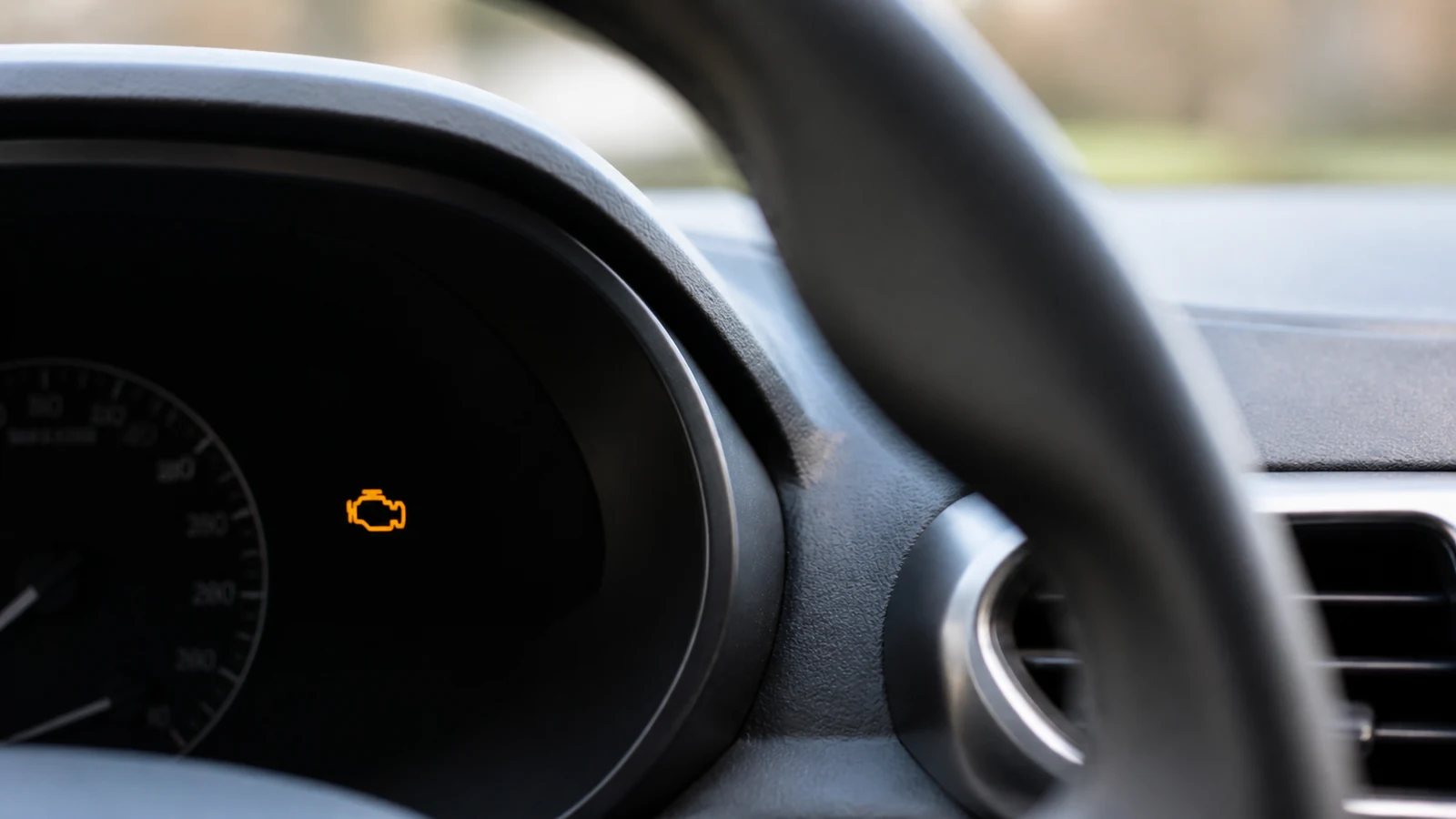
Flashing Vs Steady Engine Management Light Uk
Direct answer: a steady amber engine management light usually means the car has logged a fault and should be checked soon. A flashing amber light, a red warning, smoke, rough running or loss of power is different: stop when it is safe and get professional help rather than plugging in a scanner at the roadside.
The reason is simple. A home OBD2 reader can tell you which engine-related code was stored, but it cannot prove the car is safe to keep driving. The AA's engine management light guidance treats flashing or red cases as more urgent than a steady amber lamp, and its dashboard warning light guidance advises easing off and stopping safely if the light flashes while driving.
Use the light behaviour as the first filter
| What you see | What to do first | Where a reader fits |
|---|---|---|
| Steady amber, car drives normally | Finish the journey carefully, then investigate soon. | Read and record the code before booking a garage or clearing anything. |
| Flashing amber while driving | Avoid hard acceleration and stop where safe. | Do not use the scan result as permission to continue. |
| Red lamp, smoke, strong misfire, overheating or no power | Stop safely and arrange help. | Leave diagnosis to roadside assistance or a garage. |
| Amber light before MOT | Investigate before the test. | Reading the code helps planning; clearing to hide the light is the wrong goal. |
Why not just clear the light?
Clearing the lamp removes warning context, not the fault that caused it. That matters for repairs and for MOT preparation. The DVSA MOT manual includes a visual check of the malfunction indicator lamp for applicable vehicles, and a lamp indicating a malfunction is listed as an emissions-related fail item in the MOT inspection manual section on nuisance.
A safe driveway sequence
- Note whether the light is steady, flashing or red.
- Write down symptoms: rough idle, smell, smoke, overheating, limp mode, fuel cap recently opened, or poor acceleration.
- If the lamp is steady amber and the car drives normally, plug in the reader with the ignition in the correct position for your vehicle.
- Record stored and pending codes before clearing anything.
- Use the code as a triage clue, not a final diagnosis.
When a home reader is useful
A plug-in reader is useful when the car is already parked, the warning is steady amber, and you want the code before paying for a basic diagnostic read. If you also need a no-phone, no-app route, compare that workflow with handheld and Bluetooth OBD2 scanners. If your next question is whether it is ever appropriate to erase the lamp yourself, read the companion guide to clearing a check engine light yourself in the UK.